|
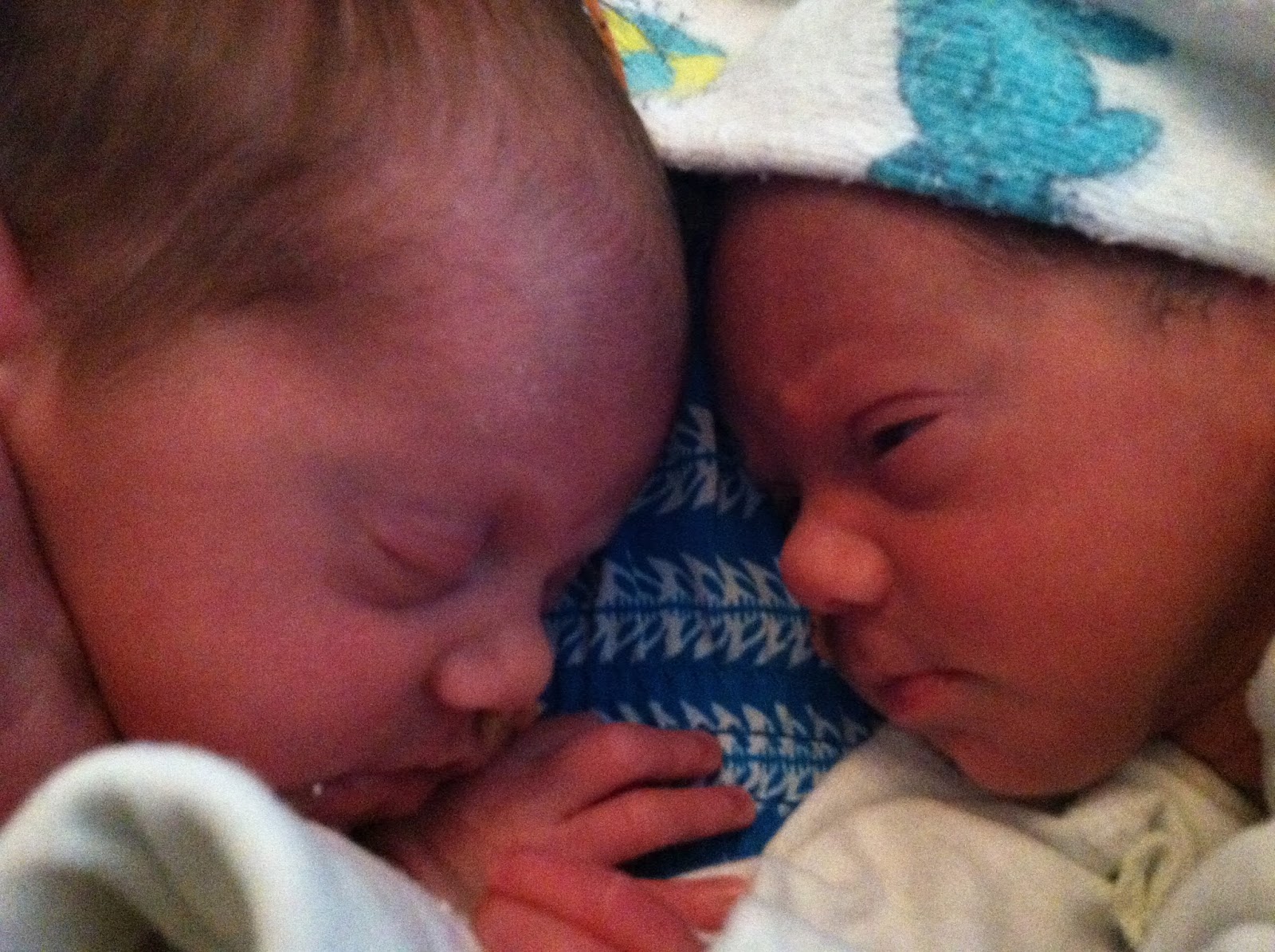
| Zoe and Calliope Hahn-Taylor |
On May 10th of this year, 2013, at 11 and 11:01
AM, I gave birth to identical baby girls, Zoe and Calliope, in a hospital on a
hill in San Francisco. They came at 33 weeks gestational age. Calliope was 3 pounds, 8 ounces, and Zoe was 4 pounds, 15 ounces.
 |
| (pic credit: rabbitroom.com) |
The operating room looked onto a eucalyptus forest swaying
in the wind, an image which calmed me before the unanticipated c-section. I
think of a Wendell Berry poem called “The Peace of Wild Things.” The poem
begins: “When despair for the world grows in me / and I wake in the night at the
least sound / in fear of what my life and my children’s lives may be... / I go and
lie down where the wood drake / rests…”
The sight of trees swaying in the wind,
the hill of Mount Sutro, the blue sky and tendrils of fog, and the absence of
buildings in the distance, gave me something to hang hope onto. Everything
would be fine--the eternal nature of wildlife assured me.
 |
| Sutro Forest (photo credit: sutroforest.com) |
*
Thirty-eight years ago I was born on a renovated World War
Two tanker, Olive Oyl, to hippie parents. My mom
smoked Benson and Hedges while my dad popped aspirin
and read a midwifery manuals, and here I am. It made for a good story. A lucky and adventurous story, the kind I wished on my own children.
 |
| On the Olive Oyl with my parents |
My mom told me after Genevieve was born--and Genevieve's birth plan had gone all awry with an emergency c-section--that "your birth story doesn't matter; what matters is what comes after."
*
 |
| Touching Calliope for the first time outside the womb. |
Nothing could prepare me for the surrealism of the Neonatal Intensive Care Unit:
tiny babies laced with wires and tubes lying in plastic “isolettes”. Breathing gear
that looked like miniature elephant trunks. Bright orange nasal-gastric feeding
tubes. Pads on bare skin. IVs with needles as big as baby veins stuck into
delicate hands. Gauze with drops of baby blood. Bleeping monitors measuring
heart rate, respiration, and oxygenation.
 |
| Marshall holding Zoe for the first time. |
“Why are you crying?” the nurse gently asked me after I'd been wheeled into the NICU where my girls lay in separate boxes, but I only looked at her. Wasn’t it obvious?
I appreciate to the core of my being all the help my
daughters received in the hospital, though I wasn’t able to hold them right
after they were born. I look at the ludicrous hospital bill—approximately
$380,000 per child—and am grateful for insurance, though in order to get that
insurance my husband works a job that ultimately dissatisfies him with the long hours, commute, and time spent sitting in front of a computer.
 |
| Zoe's first smile. |
The best things in life are being around people I love, and
being outdoors among trees or meadows, on beaches or mountains, any place far
from traffic and sidewalks, cars and stores. In the three weeks the babies were
in the NICU, my days and nights melded into one. Though we didn't have walks in the woods, we found moments of family unity.
My firstborn daughter, three and a half year
old Genevieve, was understandable upset about the lack of attention in her life while her sisters were in the hospital, but she’d ask me frequently, “Would
you draw me a picture of Mommy, Daddy, Genevieve, and the babies?” After a
pause, she’d add: “And a pond with a duck in it, and a rainbow.” Her sense of
hope and despair was much like mine.
 |
| A friend doing reiki on Calliope during phototherapy in the NICU. |
 |
| Three sisters at home. |
Zoe and Calliope came home after three weeks. They regulated their temperature, ate heartily, and pooped without problems. They chittered, grunted, chirped, and whistled. They were like baby goats, or monkeys, or birds.
They also seemed embryonic and fragile. I was sick with fear about losing
one or both of them. The lines from the Wendell Berry poem often trickled
through my mind as I held a baby and looked outside my window at the view of
Bayview Hill. I longed to be among nature with my children. I walked with Genevieve on that hill when she was 13 days old, but I couldn’t go anywhere with Calliope and
Zoe because I worried about exposing them--but exposing them to what? The elements? The land? Other people? I thought, "So this is post-partum depression," and I fixated on the images from the NICU and felt lost.
 |
| Bayview Hill, SF (photo credit: foundsf.org) |
*
I’m no good at dates and memory anymore, but one day Marshall
and I decided enough was enough—we should go on a walk in nature.
 |
| At Candlestick |
Zoe and Calliope’s first stroll was up Quarry Road in
Brisbane, a pedestrian-only road where arroyo willows grew in muddy ditches,
and bees orbited blooming blackberry bushes. Then we brought the girls to
lounge on the grass outside of the Conservatory of Flowers in Golden Gate Park,
with marigolds and begonias at our feet. Another day we wandered around Land’s
End where the watery ruins of the Sutro Baths are. We went to Candlestick Point State Recreation Area, to McLaren Park, to the Visitacion Valley Greenway. We moved slowly and gently. It was enough to be outside for even an hour, to just sit somewhere.
 |
| At the Conservatory |
Every time we went outside,
especially when we carried the babies against our chests, they slept with their
faces tilted into the sunshine. They didn’t stop breathing, or burn, or cry.
They slept like it was the aboriginal Dreamtime, and sometimes they moved their
mouths as if dreaming of nursing.
 I’m no fool about life and death, or risking our lives. Every moment is just what it is. My father died from drowning when I
was about a year and a half old, and if that taught me anything, it’s to do
what you love, and to try to harm none in the process. To do what makes you happy, whether diving in tropical seas as my father was doing, or hiking on an urban trail with three children, two of them fresh from the hospital. Though taking twins for a
stroll meant a complicated exit from the house, the sunshine and fresh air were cathartic, and the movement of my body made me feel stronger.
I’m no fool about life and death, or risking our lives. Every moment is just what it is. My father died from drowning when I
was about a year and a half old, and if that taught me anything, it’s to do
what you love, and to try to harm none in the process. To do what makes you happy, whether diving in tropical seas as my father was doing, or hiking on an urban trail with three children, two of them fresh from the hospital. Though taking twins for a
stroll meant a complicated exit from the house, the sunshine and fresh air were cathartic, and the movement of my body made me feel stronger.
 |
| At McLaren Park in San Francisco |
Once again, Wendell Berry comes to mind. At the end of the poem I
referred to earlier, “The Peace of Wild Things,” he writes: “For a time / I
rest in the grace of the world, and am free.” And as I walk down some
semi-urban trail with two premature babies breathing softly against my chest, I
know what he means.